
Table of Contents
- How the hair growth cycle works
- How much hair fall is normal?
- 12 common causes of hair fall
- Warning signs you should not ignore
- How to reduce hair fall naturally
- Medical treatments worth knowing about
- Frequently asked questions
How the Hair Growth Cycle Works
To understand why hair falls, it helps to know how it grows. Each of the roughly 100,000 follicles on your scalp runs on its own independent clock, moving through three main stages:
Anagen (the growth phase). This is the active stage, when the follicle builds new hair. It lasts anywhere from two to seven years, and it’s why some people can grow hair to their waist while others find it stalls at their shoulders. About 85 to 90 percent of your scalp hairs are in this phase at any given time.
Catagen (the transition phase). A brief stage of around two to three weeks. Growth stops, and the follicle begins to shrink and detach from its blood supply.
Telogen (the resting and shedding phase). The hair rests for about three months. At the end of this stage, it releases and falls out, and the follicle starts a fresh cycle with a new strand.
Hair loss becomes a problem when something disrupts this cycle: too many follicles switch to the resting phase at once, the growth phase shortens, or the follicle shrinks and can no longer produce a healthy strand.
How Much Hair Fall Is Normal?
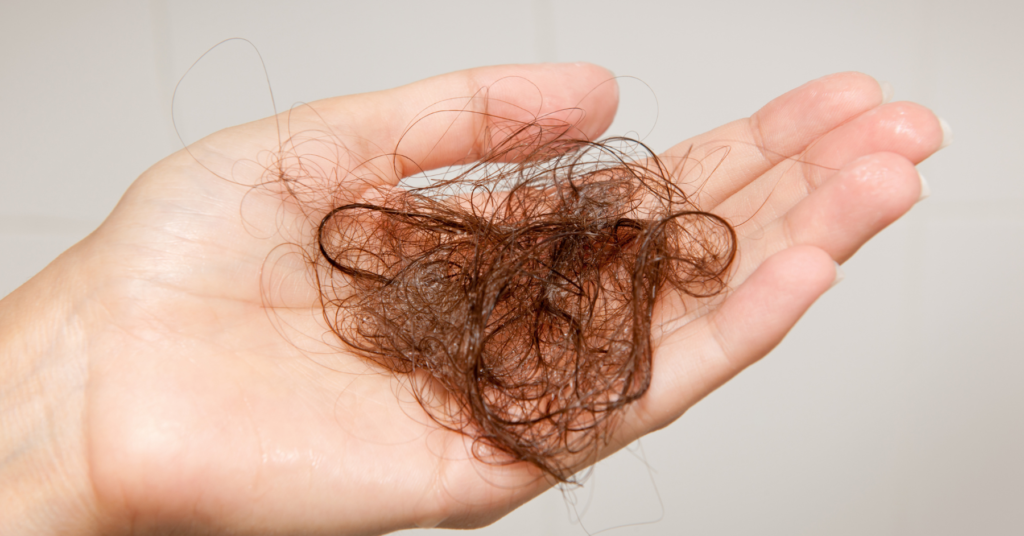
Most people shed somewhere between 50 and 100 hairs a day. That number can feel invisible if you wash your hair every day, but if you wash it twice a week, you may see 200 or more hairs come out in a single wash simply because several days of shedding collect at once. That is usually completely normal.
Here is a quick way to tell the difference between everyday shedding and true hair loss:
- Normal shedding: Hair that falls evenly from all over the scalp, with a small white bulb at the end, and without any visible thinning.
- Concerning hair fall: Noticeably thinner ponytail, a wider parting, bald patches, a receding hairline, hair coming out in handfuls, or shedding that lasts longer than three months.
Another simple check is the gentle pull test. Take a small section of about 50 to 60 hairs between your fingers and slide your fingers gently along its length. If more than six or so hairs come away, it may be worth looking into further.
12 Common Causes of Hair Fall
1. Genetics (Pattern Hair Loss)
The single most common reason for long-term hair loss is inherited. Known medically as androgenetic alopecia, it affects both men and women. Certain follicles are genetically sensitive to hormones called androgens, and over time they shrink, producing thinner, shorter hairs until they eventually stop producing visible hair altogether.
In men, it typically shows up as a receding hairline and thinning at the crown. In women, hair usually thins across the top of the scalp, and the parting widens, though the frontal hairline is usually preserved. This type of hair loss develops slowly, over years, and it is progressive without treatment.
2. Emotional and Physical Stress
Stress does not just feel bad; it can show up on your head. A major shock to the body or mind can push a large share of growing hairs into the resting phase at the same time, a condition called telogen effluvium. Because of how the hair cycle works, the shedding typically starts two to three months after the triggering event.
Common triggers include bereavement, a breakup, job loss, surgery, a serious accident, or a prolonged period of anxiety. The encouraging part is that this type of hair fall is generally temporary, and hair usually recovers once the stress passes and the body settles.
3. Nutritional Deficiencies
Your hair is one of the first things your body deprioritizes when nutrients run short, because it is not essential to survival. Several deficiencies are linked to hair fall:
- Iron: Low iron stores (ferritin) are one of the most overlooked causes of shedding, particularly in women with heavy periods and in people who eat little red meat.
- Vitamin D: Plays a role in follicle cycling. Low levels are common in places with long winters.
- Zinc: Supports tissue repair and hair follicle function.
- Protein: Hair is made primarily of keratin, a protein. Not eating enough can leave the body without the raw materials to build strands.
- Biotin and other B vitamins: True biotin deficiency is rare, but when present, it can affect hair.
If you suspect a deficiency, get a blood test before buying supplements. Taking too much of certain nutrients, such as vitamin A or selenium, can itself cause hair loss.
4. Crash Diets and Rapid Weight Loss
Losing a lot of weight in a short time, or following a very low-calorie or restrictive diet, can trigger shedding a few months later. The body treats it as a physical stress and diverts energy away from hair growth. Eating disorders can have similar effects, along with serious wider health consequences, and anyone struggling with food deserves professional support.
5. Hormonal Changes
Hormones are powerful regulators of hair growth. Several life stages and conditions can disrupt them:
- Pregnancy and postpartum: During pregnancy, higher estrogen levels keep hair in the growth phase longer, which is why hair often looks thicker. After birth, hormone levels drop, and a large batch of hairs shed at once, usually three to four months postpartum. It looks dramatic but typically resolves within a year.
- Menopause: Falling estrogen and progesterone can lead to thinner hair and slower growth.
- PCOS (polycystic ovary syndrome): Higher androgen levels can cause thinning on the scalp, often alongside irregular periods and acne.
- Starting or stopping hormonal birth control: Some people notice temporary shedding when changing contraception.
6. Thyroid Disorders
Your thyroid gland controls metabolism, and it also influences the hair cycle. Both an underactive thyroid (hypothyroidism) and an overactive one (hyperthyroidism) can cause diffuse thinning across the scalp. Other signs include fatigue, weight changes, feeling unusually cold or hot, dry skin, and changes in mood. A simple blood test can diagnose thyroid problems, and hair often improves once the condition is treated.
7. Illness, Fever, and Infection
A high fever, a severe infection, or a significant illness can disrupt the hair cycle. Many people notice heavy shedding a couple of months after recovering from serious viral infections. Like other forms of telogen effluvium, this type of hair fall is usually temporary, and regrowth follows as the body recovers.
8. Medications and Medical Treatments
Hair loss is a listed side effect of a wide range of medications, including some used for:
- High blood pressure
- Depression and anxiety
- Blood thinning
- Acne (certain retinoids)
- Gout, arthritis, and some other long-term conditions
Chemotherapy is the best-known cause of treatment-related hair loss because it targets rapidly dividing cells, including hair follicle cells. Never stop a prescribed medication on your own. Speak with your doctor, who may be able to adjust the dose or suggest an alternative.
9. Hairstyling and Hair Care Habits
Sometimes the cause is not inside your body but in your routine. Frequent tight hairstyles such as ponytails, braids, buns, and extensions can pull on the follicles and cause traction alopecia, which, if it continues for years, can become permanent. Other damaging habits include:
- Frequent heat styling with flat irons, curling tongs, and blow dryers at high temperatures
- Bleaching, relaxing, perming, and repeated coloring
- Brushing or rubbing hair aggressively when it is wet and fragile
- Sleeping with tight hair ties
Note that damage to the hair shaft causes breakage, which is different from true hair fall from the root. Both can leave hair looking thinner, though, so it helps to look closely at the strands that come out.
10. Scalp Conditions
Healthy hair grows from a healthy scalp. Inflammation and irritation can weaken follicles and increase shedding. Conditions that can contribute include:
- Dandruff and seborrheic dermatitis: Flaking, itching, and redness
- Fungal infections (tinea capitis): Scaly patches and broken hairs, more common in children
- Psoriasis of the scalp: Thick, scaly plaques
- Folliculitis: Inflamed, sometimes painful follicles
These conditions are generally treatable with medicated shampoos or prescription treatments, so it is worth getting them diagnosed properly.
11. Autoimmune Conditions
In alopecia areata, the immune system mistakenly attacks the hair follicles, leading to sudden round or oval bald patches on the scalp, beard, or body. It can come and go, and in some cases hair regrows on its own. Other autoimmune conditions, such as lupus, can also affect the hair. Alopecia areata needs a medical diagnosis, and effective treatments now exist.
12. Aging
As we get older, hair growth naturally slows, strands become finer, and more follicles stop producing. This is an expected part of aging, though lifestyle, genetics, and general health strongly influence how noticeable it is.
Warning Signs You Should Not Ignore
Most hair loss is not dangerous, but certain patterns deserve a prompt check-up with a doctor or dermatologist:
- Hair loss that appears suddenly or in distinct patches
- Shedding that continues beyond three months
- A scalp that is itchy, painful, red, scaly, or has pus or sores
- Hair loss together with fatigue, unexplained weight change, irregular periods, or other new symptoms
- Hair loss in a child
- Hair loss that follows starting a new medication
Seeing a professional early matters, because some forms of hair loss, particularly scarring alopecias, can permanently destroy follicles if left untreated.
How to Reduce Hair Fall Naturally
While you cannot change your genes, many everyday habits support healthier hair and a calmer scalp.
Feed Your Hair From the Inside
Aim for a balanced diet with enough protein at every meal. Eggs, fish, poultry, beans, lentils, nuts, and dairy are all good sources. Add iron-rich foods such as leafy greens, lentils, and lean meat, and pair plant-based iron with vitamin C (like citrus or peppers) to boost absorption. Fatty fish, seeds, and walnuts provide healthy fats that support scalp health.
Manage Your Stress Levels
You cannot always remove stressors, but you can build resilience. Regular exercise, consistent sleep, time outdoors, meditation, deep breathing, and talking to someone you trust all help the body recover. If stress or anxiety feels overwhelming, professional support is a sign of strength, not weakness.
Be Gentle With Your Hair
- Use a wide-toothed comb, and detangle from the ends upward
- Let hair air-dry when you can, and lower the heat when you cannot
- Loosen up tight hairstyles, and give your hair days off from ponytails
- Choose a silk or satin pillowcase to reduce friction
- Space out chemical treatments, and consider professional application
Care for Your Scalp
Wash with a gentle shampoo that suits your scalp, whether oily, dry, or flaky. Massaging the scalp for a few minutes while washing may improve circulation and help you spot problems early. If you have persistent dandruff, a medicated shampoo can help.
Review Your Lifestyle
Smoking is linked to poorer hair health, and heavy alcohol use can affect nutrient levels. Staying hydrated, sleeping seven to nine hours a night, and keeping up regular physical activity support the whole body, including your hair.
Be Careful With Supplements and Trends
The hair supplement aisle is crowded with bold promises. Supplements help mainly when you have a genuine deficiency, so test first. Be cautious with trendy home remedies as well. Some natural oils may moisturize the hair and scalp, but there is limited evidence that they regrow hair.
Frequently Asked Questions
Can stress really cause hair fall?
Yes. Significant physical or emotional stress can push many hairs into the resting phase at once, causing noticeable shedding about two to three months later. It is usually temporary.
Will my hair grow back after hair fall?
It depends on the cause. Hair loss from stress, illness, postpartum changes, or nutritional deficiency typically grows back once the cause is addressed. Pattern hair loss is ongoing but can often be slowed with treatment, and scarring conditions can cause permanent loss, which is why early diagnosis matters.
How long does it take to stop hair fall?
Because of the hair cycle, improvements are slow. After correcting a cause, shedding often settles within three to six months, and visible regrowth can take six to twelve months.
Does washing hair daily cause hair loss?
No. Washing does not cause hair loss; it simply removes hairs that were already ready to fall. Washing less often just means they collect and come out all at once.
Is hair fall in women different from hair fall in men?
The causes overlap, but the patterns differ. Men more often develop a receding hairline and crown thinning, while women tend to notice overall thinning and a widening part. Women are also more affected by iron deficiency, pregnancy, and menopause-related changes.
Which vitamin deficiency causes hair fall?
Low iron, vitamin D, and zinc are the most commonly linked. Your doctor can check your levels with a blood test.
Hair fall can feel deeply personal, because hair is tied so closely to how we see ourselves. But understanding what lies behind it takes away much of the fear. Whether the cause is genetics, stress, hormones, diet, or daily habits, there is almost always a next step you can take.
Start by observing your own patterns: when the shedding began, what changed in your life around then, and whether you have other symptoms. Then be kind to your hair, nourish your body, manage stress, and see a healthcare professional if the hair fall is sudden, patchy, or persistent. With patience and the right approach, many people see their hair become fuller and healthier again.
Disclaimer: This article is for general information and education only. It is not a substitute for professional medical advice, diagnosis, or treatment. Always consult a qualified healthcare provider about any health concerns, including hair loss.
Discover more from
Subscribe to get the latest posts sent to your email.

